
Explosion-Proof Enclosures: What They Are and How They Work
Key Takeaways
- Explosion-proof enclosures contain an ignition rather than prevent one.
- Intrinsically safe protection keeps voltage and current too low for a spark to happen at all, which is why it's typically used for instruments and sensors rather than motors or drives.
- ATEX (EU), IECEx (international), and the US Class I Division 1/2 system are different rulebooks for the same underlying construction.
- Bison Profab's ATEX/IECEx line is built in 304 and 316L stainless steel and satisfies both the international and US certification systems in one design, with custom cutouts and mounting built in before certification testing rather than after.
If you spec electrical equipment for a refinery, chemical plant, or grain handling facility, you already know explosion-proof enclosures are essential hardware: they're the barrier between a spark inside a junction box and a fire or blast outside it. Let's talk about what these enclosures do, how the metal housing pulls that off, and what to check before you buy.
What Is an Explosion-Proof Enclosure?
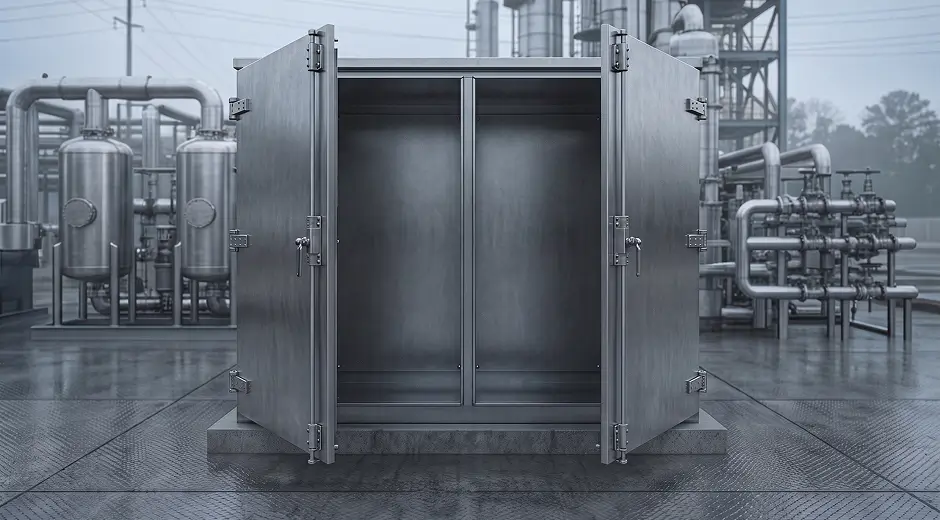
An explosion-proof enclosure is a housing built to contain an internal explosion, not prevent one. If arcing components, a short, or excess heat inside the enclosure ignites the surrounding gas or dust, the housing holds that ignition inside its walls. Hot gases still escape, but only through tightly machined joints that cool them below the ignition temperature of whatever's in the air outside. That's the entire job: keep an internal spark from becoming an external explosion.
You'll see this same equipment listed under different names depending on who's buying it. Electricians and engineers usually use the full technical term. Procurement teams and plant managers often search for explosion-proof cabinets instead. Same product, same certification requirements, different habits of speech.
How Metal Explosion-Proof Enclosures Work
The mechanism is called a flame path, and it's mechanical rather than electronic. When gas ignites inside the housing, the pressure has to go somewhere. Engineers design the enclosure's seams, threaded joints, and cover interfaces as long, narrow gaps rather than tight seals. As hot gas forces its way through that gap, the metal absorbs heat, and the gas cools. Whatever escapes has already cooled below the point where it could ignite anything outside.
Why the Housing Has To Be Metal
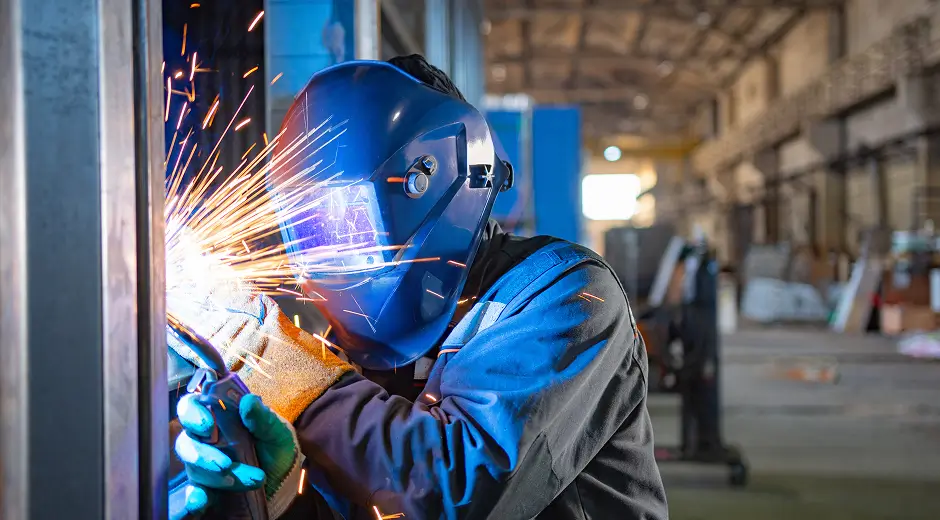
Plastic and thin sheet metal can't survive the pressure spike from an internal ignition without deforming, and a deformed enclosure opens gaps the flame path was never designed to have. Explosion-proof housings are built from stainless steel, cast or machined aluminum, or carbon steel, thick enough to hold their shape under pressure without cracking. Stainless steel earns its place in enclosures that also have to survive saltwater, wash-down chemicals, or outdoor weather on top of the explosion rating. That's why you'll see 304 and 316L stainless steel specified for coastal refineries and food and beverage plants.
The Role of Joint Tolerances
A flame path only works if the gap and the length of that gap are machined to spec. Standards call for a minimum number of engaged threads on threaded joints and a maximum gap width on flanged joints, both verified during certification testing. Field-drilling a hole in the housing or swapping a cover from a different unit breaks that tolerance and voids the certification, even if the enclosure still looks intact.
Explosion-Proof vs. Intrinsically Safe
Explosion-proof and intrinsically safe enclosures solve the same problem in opposite ways. One assumes ignition might happen and contains it inside a heavy metal housing. The other keeps voltage and current so low that a spark can't happen in the first place. Intrinsically safe enclosures don't need flame-path construction, because the wiring itself is too weak to ignite anything. The right approach depends on the equipment. Instruments and sensors are usually the ones you can wire as intrinsically safe. Motors, drives, and anything else pulling real power need the heavier, contained housing.
Explosion-Proof Cabinet Applications
Explosion-proof cabinets show up anywhere flammable gas, vapor, or combustible dust can collect. That includes:
- Oil & Gas: refineries, offshore platforms, and pipeline stations, where hydrocarbon vapor is a constant condition
- Chemical processing plants handling solvents and other volatile compounds
- Grain handling and woodworking, where combustible dust is the hazard
- Wastewater treatment, where methane collects in enclosed spaces
- Water treatment and other facilities running electrical equipment outdoors in corrosive or wash-down environments
Choosing the Right Enclosures
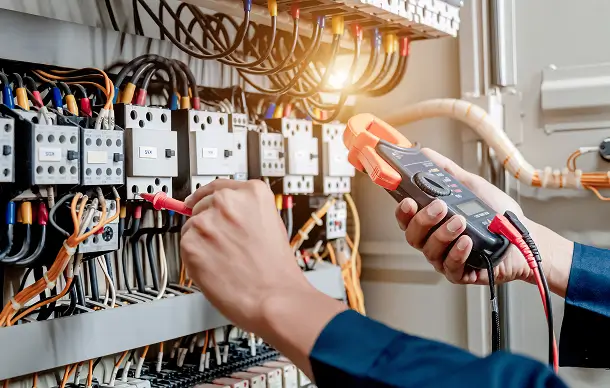
To determine which explosion-proof electrical enclosures are right for your project, answer these four questions:
- What class and division or zone are you rated for?
- What material can survive your environment?
- What size fits your equipment?
- Do you need custom cutouts or gland plates for cable entry?
A stock catalog enclosure covers the first two questions. It rarely covers the last two, which is where a lot of installs go sideways. A certified enclosure that's the wrong size or missing the right penetrations doesn't do anyone any good.
That's the case for working with a fabricator instead of a distributor when the application is nonstandard. Custom cutouts, welded NPT couplings, internal mounting panels, and gland plates on any side of the housing can all be built into a certified enclosure without touching the flame path itself, as long as the modification happens before certification, not after installation.
ATEX, IECEx, and Class I Division 1 Certifications
Two certification systems cover hazardous locations, and they describe the same kind of construction under different names.
The US uses the Class and Division system: Class I covers flammable gases and vapors, and Division 1 means the hazard is present under normal operating conditions, not only during a fault. The rest of the world uses a Zone-based system, certified through ATEX (the EU directive) and IECEx (the international scheme built on the same technical requirements). They're not competing standards. They're the same containment principle written into two different rulebooks, which is why a single enclosure design can usually satisfy both.
Why Bison Profab Earns Its Place as an Enclosure Manufacturer
Bison Profab's ATEX and IECEx-certified line is built to the same construction that satisfies Class I Division 1 and 2 in the US, so one design covers both a domestic refinery and an overseas plant. It's available in 304 and 316L stainless steel, in screw-cover and hinged-door configurations, with matching glands and back panels for each. If your spec calls for a certified explosion-proof cabinet, that's the line to look at.
Bison Profab fabricates in-house rather than distributing from catalog stock, which is how it builds custom cutouts, gland plates, and mounting panels into a certified enclosure before testing. Our testing measures are extensive, there are quality assurance checks during every step of the enclosure manufacturing process.


Partner With Bison Profab for Certified Explosion-Proof Enclosures
Bison Profab builds ATEX and IECEx certified enclosures to your spec, from stock configurations to fully customized housings. Talk to our team about your explosion-proof enclosure spec, and we'll help you land on the right material, rating, and configuration.
Explosion-Proof Enclosure FAQs
Is a NEMA 4X enclosure the same as an explosion-proof enclosure?
No. NEMA 4X rates how well a housing keeps out water, dust, and corrosion. It says nothing about whether the enclosure can contain an internal explosion. A NEMA 4X-rated box installed in a hazardous location without a separate hazardous-location certification doesn't meet code, even though the two ratings often show up on the same spec sheet. Bison Profab carries both IP66/NEMA 4X ingress protection and ATEX/IECEx explosion-proof certification, which many outdoor hazardous-area installs need.
What's the difference between explosion-proof and flameproof?
Flameproof is the term used in IEC and ATEX standards (marked Ex d). Explosion-proof is the term used in the US National Electrical Code for the same containment approach. Different rulebooks, same engineering principle: contain the ignition, cool the escaping gas through a flame path, and stop it from reaching the outside atmosphere hot enough to ignite anything.
What IP rating do I need on top of the explosion-proof certification?
It depends on where the enclosure sits. Outdoor, wash-down, or corrosive environments typically call for IP66 or NEMA 4X in addition to the hazardous location certification. Indoor installations away from moisture and dust can often get by with less. The explosion-proof rating and the ingress rating are tested and certified separately, so check both numbers rather than assuming one implies the other.
Does drilling a hole in an explosion-proof enclosure void the certification?
Yes, in almost every case. The certification covers the exact construction that was tested, including the flame path dimensions at every joint. A field-drilled hole, an added cutout, or a swapped cover from a different unit changes that construction, and no field test can re-certify it. Any cutout or gland plate needs to be built in before certification, not added after the enclosure ships. Bison Profab’s custom capabilities and cabinet integration services ensure you can build out your enclosure fully with us and prevent any need for future changes.
Can an explosion-proof enclosure be inspected and reused, or does it need to be replaced after an incident?
Routine inspection is normal and expected. Most facilities working under IEC 60079-17 or a similar standard set an inspection schedule based on the site's hazard classification, checking things like gasket condition, corrosion at the flame-path joints, and whether any unauthorized modification has been made. What isn't routine is reuse after an actual internal ignition event. At that point, the enclosure needs a full inspection against its certification documentation before anyone assumes it's still safe to run, and replacement is often the more defensible call.
